INTERSECTIONS
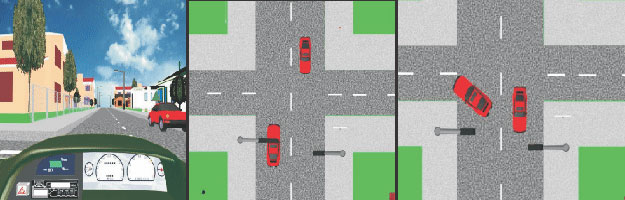
When approaching a junction or intersection on a public road, the driver or rider of any vehicle must follow strict right-of-way regulations to ensure the safe and orderly flow of traffic.
Yielding to Traffic from the Right
Unless otherwise directed by a traffic control device or a traffic officer: The driver or rider must yield the right of way to all vehicular traffic approaching from the right within the intersection.
This rule applies whether the intersection is uncontrolled (no stop signs, yield signs, or traffic lights) or controlled only by road markings.
"Yield" means slowing down or stopping if necessary, allowing vehicles coming from the right to proceed first before you enter or cross the junction.
Exceptions to the Rule
The obligation to yield does not apply if,
Your entry into the intersection is controlled by a traffic officer, and you have been given a direct instruction to proceed.
Your movement is regulated by a green traffic signal, a stop sign, or a yield sign that grants you the right of way.
A clearly marked traffic circle (roundabout) or other special intersection provides different right-of-way instructions.
PARKING
Parking Restrictions on Public Roads in South Africa
South African road traffic laws set out strict rules on where and how a vehicle may be parked on a public road.
These regulations are designed to keep roads safe, maintain traffic flow, and protect pedestrians and property. Below is a detailed guide to areas where parking is prohibited both outside urban areas and within urban areas.
General Parking Prohibitions on Any Public Roadway
No person may park a vehicle on the roadway of a public road in any of the following situations,
• When directed by a traffic officer: If a traffic officer instructs you not to park, you must obey the order.
• Beyond the driver's control: Parking is only allowed if there is a genuine emergency or cause beyond the driver or rider's control.
• Where stopping is not permitted: If a sign or road marking prohibits stopping, parking is also illegal.
• In contravention of a road traffic sign: Any sign or marking restricting parking must be obeyed.
• Near a fire hydrant: Parking is not allowed on the same side of the road as a fire hydrant within 1.5 metres on either side of the hydrant.
• Obscuring road signs: You may not park where your vehicle would block or obscure any road traffic sign.
• Encroaching on the sidewalk: Parking in a way that extends onto or over a pedestrian sidewalk is prohibited.
• Blocking an entrance: It is illegal to park in a way that obstructs access to any private driveway or public vehicular entrance.
• Outside an urban area: No vehicle may be parked on any portion of the roadway itself (excluding the shoulders) of a public road outside an urban area, or with any part of the vehicle within 1 metre of the edge of the roadway.
Additional Parking Rules Within Urban Areas
When inside a town, city, or other urban environment, the following extra restrictions apply:
• Near pedestrian crossings: Do not park within 9 metres of the side from which you approach a pedestrian crossing.
• Near intersections: Parking is prohibited within 5 metres of any intersection.
• On traffic signal mechanisms: You may not park upon or over the actuating mechanism of a traffic light.
• Distance from the curb: The outside of the left-hand wheel of your vehicle must not be parked more than 450 millimetres from the edge of the roadway.
• Narrow roads: Parking is not allowed on a public road that is less than 5.5 metres wide.
• Traffic islands and pedestrian zones: Parking is strictly prohibited on a traffic island, in a pedestrian mall, or in a pedestrian lane.
• on a traffic island or in a pedestrian mall or pedestrian lane.
